
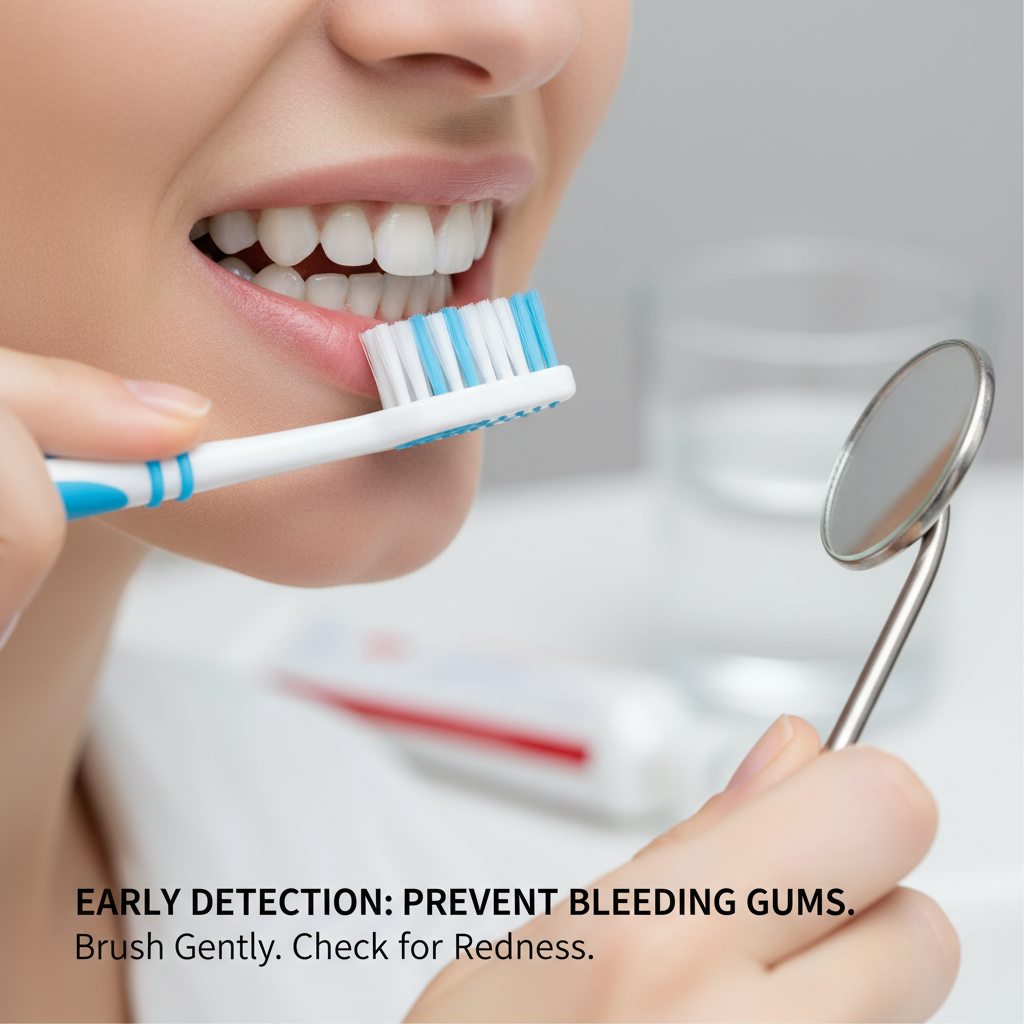
Bleeding gums when brushing causes many people to worry about their oral health, and with good reason. While a little pink in the sink might seem minor, it is often one of the earliest warning signs that something is changing in your gums. Understanding what this symptom means, what tends to cause it, and when you should see a dentist helps you protect both your mouth and your overall health.
In this guide, you will learn the most common bleeding gums when brushing causes, how to tell if you might have gum disease, and practical steps you can take right now to improve your oral health.
When you see blood after brushing, it usually means your gum tissue is irritated or inflamed. The most common reason is plaque buildup along the gumline, which leads to gingivitis, the earliest stage of gum disease. Plaque is a soft, sticky film of bacteria that forms on your teeth every day. If it is not removed with regular brushing and flossing, it can irritate your gums and cause them to swell and bleed.
Medical sources consistently point to plaque as the primary cause of bleeding gums and gum disease, including gingivitis and periodontitis, the more advanced form of gum disease that affects the bone and supporting structures of your teeth [1]. Understanding what is happening at the gumline is the first step in protecting your smile.
Bleeding can also be triggered by how you brush or floss, certain medications, hormonal changes, health conditions, and even vitamin deficiencies. The important thing is not to ignore the bleeding. It is your body’s way of telling you something needs attention.
For most people, gum disease is the number one cause of bleeding gums when brushing. Gum disease develops in stages and is strongly linked to plaque and tartar buildup.
Gingivitis is inflammation of the gums caused by plaque that is not removed effectively. When plaque is allowed to sit at the gumline, it irritates the gum tissue and leads to redness, swelling, tenderness, and bleeding when you brush or floss. Several clinical sources note gingivitis as the main cause of bleeding gums when brushing [2].
The good news is that gingivitis is reversible with:
If you want more detail on how gum disease begins and progresses, it can help to review guidance on how to know if you have gum disease and other early warning signs dental problems.
If plaque is not removed, it hardens into tartar, also called calculus. You cannot remove tartar with brushing alone, and it continues to irritate your gums. Over time, gingivitis can progress to periodontitis, a more serious infection that damages the tissue, ligaments, and bone that support your teeth.
Trusted health sources explain that untreated gum disease can lead to:
Bleeding gums are often one of the earliest signs that this process has started [5]. Paying attention to the symptom now gives you the opportunity to stop progression and protect your natural teeth.
Although gum disease is the leading cause, other factors can also make your gums bleed. Often, you will have a combination of more than one.
If your gums bleed but you brush aggressively or use a hard-bristled toothbrush, the way you brush might be contributing. Scrubbing your teeth with a lot of force or using stiff bristles can irritate or damage gum tissue and even contribute to gum recession over time [6].
Switching to a soft-bristled toothbrush and using gentle, circular motions can reduce trauma and still effectively remove plaque. Medical guidelines recommend brushing at least twice a day with a soft brush and flossing daily to prevent plaque buildup and reduce bleeding risk [3].
If you have just started flossing or recently become more consistent, you might notice temporary bleeding. This can happen because your gums are not used to the contact. According to multiple dental sources, this type of bleeding should improve within a few days to a week if you continue to floss properly every day [7].
If bleeding from flossing persists longer than a week or two, or becomes more pronounced, it is more likely related to gingivitis or another underlying issue and should be evaluated by a dentist.
Certain medications make your blood less likely to clot. Blood thinners are one example. These drugs can cause you to notice bleeding more easily, including from your gums when you brush or floss. Oral health organizations recommend letting your dentist and physician know if you start to experience increased gum bleeding after beginning a new medication so your care can be coordinated appropriately [8].
Sometimes bleeding gums when brushing causes trace back to changes in your overall health. Your mouth is closely connected to the rest of your body, so systemic conditions often show early signs in your gums.
Hormone fluctuations can make your gum tissue more sensitive to plaque and more likely to bleed. Pregnancy is a well-known example. Pregnancy gingivitis, linked to hormonal shifts, often leads to swollen, tender, and bleeding gums during brushing or flossing [9]. Similar changes can occur with menopause and other hormone-related life stages.
Even though you might not be changing your brushing routine, your gums can react differently during these times. Extra attention to gentle home care and regular professional cleanings is especially important if you are pregnant or experiencing other hormonal shifts.
Chronic conditions like diabetes affect how well your body fights infection and heals, which includes your gum tissue. People with poorly controlled diabetes are at higher risk for gum disease, and bleeding gums can be one of the early signs of trouble.
Other illnesses and blood disorders, such as leukemia or conditions that affect your immune system, can also contribute to gum bleeding [10]. Grinding your teeth and high levels of stress are also mentioned as potential contributing factors in some medical overviews [11].
If you have a medical condition that affects clotting, immunity, or healing, it is important to tell your dentist. This helps your dental team tailor your care and provide appropriate recommendations.
Your gums depend on proper nutrition. Deficiencies in certain vitamins can make them more fragile and prone to bleeding. In particular, low levels of vitamin C and vitamin K are linked to bleeding gums in major medical references [12].
Other nutrients such as vitamin D also play a role in immune function and bone health, and deficiencies may contribute to gum problems [9]. If you suspect a nutritional issue, a medical evaluation and dietary review can help identify and correct any deficiencies.
Bleeding gums are common, but that does not mean they are harmless. In many cases, they are the first sign of a developing dental or medical condition that benefits from early care.
According to several medical sources, persistent bleeding gums can indicate:
If bleeding continues for more than two weeks, or you notice other symptoms such as bad breath, gum swelling, gum recession, loosening of teeth, or pain when chewing, it is important to see a dentist or healthcare provider for a full evaluation [11]. Persistent bleeding during brushing might also point to a serious medical condition beyond gum disease and should not be ignored [3].
You can learn more about related oral symptoms and what they might mean by exploring topics like what causes receding gums, tooth sensitivity causes and treatment, or why do my teeth hurt randomly.
Bleeding gums that last longer than about two weeks, or occur with swelling, bad breath, or loose teeth, should always be evaluated by a dental or medical professional.
When you visit a dentist about bleeding gums, you can expect a careful, step-by-step evaluation. The goal is to identify the exact cause and determine the best treatment plan for you.
Your dentist will likely:
If your dentist suspects a systemic issue, they may recommend you follow up with your primary care provider or a specialist to check for vitamin deficiencies, clotting disorders, or other medical conditions. This coordinated approach helps ensure that both your oral and overall health are addressed.
Once you know the likely bleeding gums when brushing causes in your case, you can take targeted steps to improve gum health. It usually starts with consistent, gentle home care and regular professional visits.
Most dental and medical organizations agree on a few key habits that help reverse early gum problems and prevent further damage:
If you are interested in a broader preventive approach, reviewing guidance on how to prevent tooth decay naturally can help you protect both your teeth and gums.
Professional cleanings are essential for removing plaque and tartar that you cannot remove at home. Medical references highlight the importance of regular dental visits, typically every six months or as recommended by your dentist, to manage and prevent bleeding gums caused by plaque accumulation [13].
During these visits, your dentist or hygienist can:
If you already have signs of periodontitis, you might need more advanced treatments to control infection, such as deep cleanings or periodontal therapy, along with careful daily home care [5].
Some bleeding gums when brushing causes relate to habits and general health, so small changes can make a real difference:
Bleeding gums when brushing are not something you should just get used to. They are a clear signal from your body that your gums are irritated or that a deeper issue may be developing. Responding early helps you avoid more serious problems such as advanced gum disease, enamel damage, deep cavities, and even tooth loss.
As you pay attention to symptoms like bleeding, it is helpful to understand other early changes that can point to trouble, such as signs of cavities early stage, what is enamel erosion teeth, and symptoms of tooth infection. Recognizing patterns across these signs gives you a more complete picture of your oral health.
If your gums bleed when you brush and the problem lasts longer than two weeks, or if you notice additional symptoms, schedule an appointment with your dentist or healthcare provider. With a clear diagnosis and a focused plan, you can calm the bleeding, protect your gums, and support a healthier smile for years to come.